
News
Loading...
About Us
We learn, teach, work, and live on traditional Indigenous territories that in Canada include treaty lands, unceded lands, and Métis homelands. We pay our respects to First Nation, Métis, and Inuit ancestors. The University of Saskatchewan is on the Homeland of the Métis and Treaty 6 territory. In our commitment to this place we value respectful relationships with the people around us -past, present, and future – and the animals, lands, waters, and skies that nurture us all. We strive to live these values in our programs, activities, and interactions: relationships grounded in safety and humility, respect for all peoples and their world views, reciprocity in all relationships, relevance to wholistic wellness, and responsibility for informed pedagogy and practice.
The Department of Community Health and Epidemiology is a dynamic, cohesive academic department comprising 19 faculty, 25 medical faculty and 28 associate and adjuncts, located in the Academic Health Sciences Building. We have active graduate programs at the Masters and Doctoral levels, and make a vital contribution to the undergraduate education of medical and health sciences students and postgraduate education with the Public Health and Preventative Medicine Residency Program. Our teaching, research and community engagement focus on population health with a lens on social justice and equity for all.
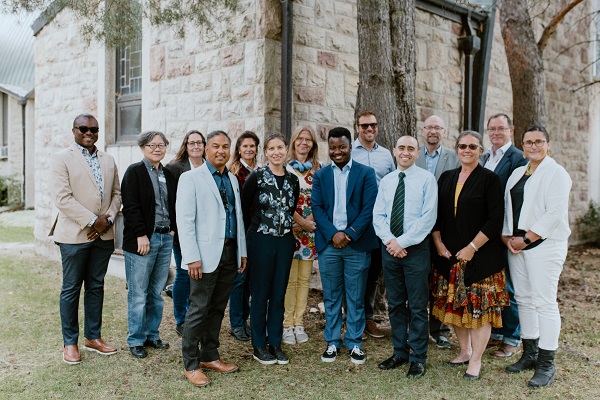
Our department (CH&E) is concerned with understanding the individual and collective factors that determine health and applying this knowledge to maintain and improve the health status of population’s and reduce inequities in health status between groups. The term ‘community’ reflects the historic emphasis of our field on the creation, protection, and promotion of health within the context of communities, which may be geographic or based on shared identity and social ties.

Greetings! As department head it is my privilege and honour to welcome you here, to the homepage of the Department of Community Health and Epidemiology. I invite you take a few moments to scroll through the various sections to learn a little bit about our vibrant and cohesive community of faculty, health professionals, administrative and research staff, students, and trainees. You will see reflected our collective and individual commitments and contributions to current and emerging priorities in population and public health equity.
We aim to be of service to the people of this province, our country, and the planet, grounded in the truths of our history and the ancestral Indigenous lands on which we are located, attentive to the present and its priorities, and aspiring to a future characterized by equity in population and planetary health.
Dr. Sylvia Abonyi, Ph.D.
Our Vision
We envision a society in which all people have equitable opportunity to experience optimal health.
Our Mission
We create, synthesize and translate knowledge for evidence-informed policies and practices which support population health equity locally and globally.
Values
1. Respect is defined as mutual acceptance and encouragement of people’s critical thinking and the diversity of persons, communities and cultures.
Behaviours which demonstrate respect:
-
- We address the needs and concerns of student, faculty and staff.
- We use participative decision making.
- We consult with and value the views of others.
- We encourage respectful collegial discussion and critical examination of diverse opinions.
- We value other people’s perspectives, time and space.
2. Fairness involves exercising impartiality and equity in interpersonal relationships as well as balancing conflicting interests.
Behaviours which illustrate fairness:
-
- We consider the interests of all parties.
- We treat others equitably with dignity.
- We provide timely and constructive feed-back.
- We support equitable relationships with partners.
- We practice collaboration through regular communications and equitable distribution of powers among stakeholders.
- We work within and follow ethical principles and guidelines.
- As a department we provide fair access to learning and funding opportunities for all students.
- As a department we provide fair access to departmental support and professional development opportunities for all faculty and staff.
3. Excellence refers to the achievement of exceptionally high quality in academic standards, service to the community and innovation.
Behaviours which demonstrate excellence:
-
- We support perseverance in the pursuit of challenging goals.
- We are committed to be active participants in the excitement and enrichment of a learning community.
- We support high achievement in students work habits and personal career’s goals.
- We promote curiosity and critical thinking in teaching and research.
- We vigorously pursue research for the benefit of persons and communities.
- We model and mentor commitment to quality.
- We foster new ideas and innovation in all we do.
- We are open to constructive criticism through peer reviews and students evaluations.
4. Professionalism refers to a commitment to abide by high ethical standards of behaviour and relevant group standards. It requires an on-going personal commitment to integrity.
Behaviours which demonstrate professionalism:
-
- We demonstrate inclusiveness in our day to day work.
- We practice open communications and responsibility.
- We know and apply ethical and professional standards of conduct.
- We take responsibility for our actions.
- We are actively engaged in research and activities which move knowledge to action.
- We are prepared to take risks and learn from our mistakes.
Goals of the Department of Community Health & Epidemiology
Department as a Healthy Community
-
- To be a healthy and vibrant community providing a supportive working environment based on good communication and collaboration.
- To support faculty and staff professional development towards personal career goals.
- To integrate the goals of individual faculty and staff with department priorities, responsibilities and funding.
Community Engagement and Social Accountability
-
- To develop relationships with community members, groups and agencies, with attention to issues of social justice.
- To share and mobilize the knowledge and skills of the department with diverse partners. This includes the provision of direct service to develop and maintain professional skills, and for remuneration.
- To continuously improve our outreach through on-going monitoring and feed-back.
Teaching and Learning
-
- To foster high-quality, scholarly teaching, based on an interdisciplinary evidence-informed Population Health approach.
- To prepare students to effectively perform the roles of practitioner, researcher, and/or educator.
- To foster self-directed, life long and collaborative learning.
- To use evidence based methods to effectively self-evaluate and to assess courses and programs on a regular basis.
Research
-
- To conduct excellent, interdisciplinary and transdisciplinary research in population health with a focus on inequities locally and globally.
- To recruit and retain students and trainees who have succeeded in their preparatory fields, and mentor these students/trainees to become excellent researchers and research users.
- To develop diverse partnerships to co-create knowledge and find applications in society.
- To support one another, via formal and informal means, thereby creating and sustaining a vibrant research milieu that is one of the most successful in Canada for its size and resources.
60th Anniversary and Reunion
The Department of Community Health & Epidemiology hosted its 60th Anniversary and Reunion from October 24–26, 2019 in Saskatoon.
More than 100 people attended the celebration, which included alumni from the community and population health sciences graduate programs and the Public Health and Preventive Medicine residency training. The event activities included a seminar, reception, conference and banquet, campus tours and lunch at the Remai Modern.
Faculty and graduates of the Department of Community Health and Epidemiology talk about their memories of the people and programs that shaped their career paths and lives. View their videos on YouTube.
Reconciliation
“Let us find a way to belong to this time and place together. Our future, and the well-being of all our children, rests with the kinds of relationships we build today.”
— Elder Chief Dr. Robert Joseph, Reconciliation Canada Ambassador
The Department of Community Health & Epidemiology’s (CH&E) reconciliation approach is built around the three pillars of academia: namely teaching and learning, research, and community engagement. We have a reconciliation working group consisting of students, staff and faculty committed to advancing the department’s responses to the Truth & Reconciliation Commission of Canada’s Calls to Action (C2A).
- The health education system at the University of Saskatchewan is committed to the recruitment, retention, and success of Indigenous students, staff, and faculty (TRC-Calls to Action #23).
- CH&E is committed to supporting Indigenous people to achieve a more equitable position in our community and society.
- CH&E is committed to taking up and linking others to opportunities for anti-racist education
- CH&E is committed to providing cultural safety/humility training to all members of our community (C2A #23) to increase understanding of Indigenous ways of knowing and doing
- CH&E is committed to be lifelong learners. We always learn, from the web of relationships between humans, animals, plants, natural forces, spirits, and the forms of land in particular places, as opposed to the discovery of universal laws (Battiste &Henderson 2000, p. 448).[i]
- CH&E is committed to blending Indigenous health and wellness content into our curriculum. This includes exposing the historical and ongoing traumas that affect Indigenous health (C2A #18), learning about the means to address these ill-health effects and promoting wellness (C2A #19), and education specific to the health professional training that we deliver (C2A #24).
[i] Battiste Marie, Henderson James Youngblood (Sa'ke'j). Protecting Indigenous Knowledge and Heritage. A Global Challenge. SERIES: Purich's Aboriginal Issues Series. UBC Press, 01 Apr 2000, Purich Publishing. ISBN:9781895830156
- CH&E research is committed to strengthening our continuing relationships with Indigenous communities as active and respected partners in research.
- CH&E is committed to ethical principles for Indigenous health research as set out by the Tri-Council. These include sharing in resources, giving back to the community, support for community capacity development, respect for Indigenous community governance and full self-determination, respect for indigenous ways of knowing and healing (C2A #21/22), and respect for the role of Elders and Knowledge Holders in research.
- CH&E is committed to including Indigenous communities and their people as actors at all levels of the university life, advising on Indigenous teaching, learning, research, and protocols. This is part of decentering and decolonizing the role of the academic system and collaborating in a more equitable engagement with the communities. [i]
- CH&E is committed to reaching out sincerely and fully with external communities as partners in our development.
- CH&E seeks to be a University presence in the community through volunteerism and engagement in community events – bridging the gap between university and community (I.e., November 25, 2020 marked the 30th anniversary of Neil Stonechild’s passing; the White Buffalo Youth Lodge hosted a vigil – how can the university community engage in community events such as this?)
[i] Gaudry & Lorenz. Indigenization as inclusion, reconciliation, and decolonization: navigating the different visions for indigenizing the Canadian Academy. AlterNative 2018. Vol 14(3): 281-227)
- Gordon Oakes Red Bear Centre
- Aboriginal Students’ Centre – University of Saskatchewan
- Morning Star Lodge
- Office of Treaty Commissioner (History of SK Indigenous People)
- Agreement between U of S and the Office of the Treaty commissioner (OTC) to evaluate reconciliation
- National Centre for Truth and Reconciliation
- Truth and Reconciliation Commission for Canada: Calls to Action
- Indigenous Mentorship Network
- Wanuskewin Heritage Park: Cultural Centre
- Indigenous Studies Portal — University of Saskatchewan
- National Collaborating Centre for Indigenous Health
- Whose Land: A web-based app that uses GIS technology to assist users in identifying Indigenous Nations, territories, and Indigenous communities across Canada.
- NAC Indigenous Theatre | National Arts Centre
- Learning an Indigenous Language
Learning a language is a wonderful and effective way to appreciate the different nuances of another culture and to communicate with its people.
Why not learn a language of one of the Indigenous peoples on whose lands we live?!
- The University of Saskatchewan offers three Cree courses in the fall, Cree 101 , Cree 110 and Cree 212 (regular tuition rates apply).
- Office of the Treaty Commissioner – Indigenous Language Resources
- The National Collaborating Center for Indigenous Education (NCCIE) - Bringing nēhiyawēwin Home
- File Hills Qu’Appelle Tribal Council – Online Language Learning
The Position Statements have been issued by the Department of Community Health and Epidemiology and the Reconciliation Committee.
Faculty List
Future Students
The MSc program in Community and Population Health Sciences prepares students for academic careers, including pursuit of doctoral studies, or to work in a variety of health and policy related workplaces. Students will learn about community and population health concepts, epidemiology, biostatistics, theory, and research. Students will develop skills in qualitative and quantitative research methods, project management, and public health. Through their coursework and thesis, they will gain hands-on experience in research.
The MSc in Community and Population Health Sciences is a thesis-based program that can be completed in two years of full-time study.
Official MSc Program Description
Overview for the MSC Curriculum (full program requirements including CHEP 994, CHEP 990, GPS 960, GPS 961 are listed at the link above):
Students will take five modules of 2-3 credit units in the fall term (11 credit units) with the classes below offered in sequence:
- CHEP 821.2 Introduction to Community and Population Health Equity
- CHEP 822.2 Introduction to Community and Population Health Research Methods
- CHEP 823.2 Introduction to Health Care and Public Health Systems
- CHEP 800.3 Introduction to Epidemiology and Biostatistics
- CHEP 824.2 Professional Research Skills in Community and Population Health
In the Winter or in successive terms, students will take a 3-credit unit research methods class. The following classes are approved for the MSc research methods requirement with other selections needing approval from the Graduate Chair:
- CHEP 805.3 Biostatistics I
- CHEP 816.3 Population Health Intervention Research (PHIR)
- CHEP 818.3 Advanced Qualitative Health Research Methods in Population and Public Health
- CHEP 820.3 An Introduction to Critical Realism its Methodology and Practice
4 credit units are required as electives. Students will consult with their supervisor and usually take a 3-credit unit elective to support their research area (or an additional research methods class) and a 1-credit unit course to meet the minimum requirement.
Possible 3 credit unit electives:
- CHEP 801.3 - Epidemiology 2
- CHEP 806.3 - Applied Statistical Methods for Follow-up Data
- CHEP 808.3 - Complex Survey Data Analysis
- CHEP 810.3 – Advanced Topics in Clinical Trials
- CHEP 814.3 – Closing the Gap: Global Health and Social Inequities
- CHEP 815.3 – Food Systems and Community Health
- CHEP 819.3 - Colonization and its Impact on Indigenous Health and Healing
- CHEP 898's - Special Topics :
- CHEP 898.3 - Understanding the COVID-19 pandemic, to better prepare for the next pandemic, offered Sept 2020, next offering TBD
- CHEP 898.3 - Environments and Community Health, offered January 2023, next offering TBD.
- CHEP 898.3 – Epidemics and global health, offered 2022 and 2023 Spring and Summer.
Possible 1 credit unit electives:
- CHEP 898.1: SPSS Software for Health Research
- CHEP 898.1: SAS Software for Health Research
- CHEP 898.1: NVIVO Software for Health Research
- CHEP 898.1: STATA Software for Health Research
- CHEP 898.1: Data Management and Analysis in Excel for Health Research
Application procedure
Admission Requirements and Application Process
As this program is very competitive, few students without supervisors are accepted yearly and you are encouraged to have a potential supervisor interested in your application when you apply.
Application deadline
Applications for Fall admission for the following academic year open on September 15 and close December 15.
Apply online to the Community and Population Health Sciences program
Interested in hearing from faculty and graduates of the Department of Community Health and Epidemiology? Watch on YouTube as memories are shared of the people and programs that shaped their career paths and lives.
The Doctorate (PhD) program in Community and Population Health Sciences prepares students for academic careers or advanced research careers in diverse settings. Through coursework and seminars, students will become experts in community and population health theory, epidemiology, and the research-policy-practice context. Designing and carrying out an independent research project provides will further develop knowledge and skills around a specific research program designed by the student and their advisory committee.
The PhD program is designed with considerable flexibility, recognizing that students come to the population health field with diverse backgrounds. This allows students to create an individualized program that take into consideration their research interests and career aspirations.
Official PhD Program Description
Overview of the PhD Curriculum (full program requirements including CHEP 996, CHEP 990, GPS 960, GPS 961 are listed at the link above):
Students may be asked to take a qualifying term. Students’ prior education will be reviewed at the admission stage and MSc classes may be required to be completed in the first term as a qualifying exam. These identified MSc courses will be in addition to the regular PhD courses and need to be completed at over 80% for the student to be considered fully qualified.
The PhD program requires a minimum of 12 credit units, selected in consultation with the supervisor and advisory committee, including the following:
- CHEP 817.3 - Advanced Research Seminar in Population Health (required)
- 6 credit units of elective graduate-level courses
- An advanced research methods course, i.e. quantitative (e.g. CHEP 801, CHEP 806, CHEP 808 or equivalent) or qualitative (e.g. CHEP 818 or equivalent).
6 credit units of electives will be chosen to support the student's research area. Students may use an additional research methods course as an elective.
CHEP 3 credit unit electives:
- CHEP 801.3 - Epidemiology 2
- CHEP 805.3 - Biostatistics I
- CHEP 806.3 - Applied Statistical Methods for Follow-up Data
- CHEP 808.3 - Complex Survey Data Analysis
- CHEP 810.3 – Advanced Topics in Clinical Trials
- CHEP 814.3 – Closing the Gap: Global Health and Social Inequities
- CHEP 815.3 – Food Systems and Community Health
- CHEP 816.3 - Population Health Intervention Research (PHIR)
- CHEP 819.3 - Colonization and its Impact on Indigenous Health and Healing
- CHEP 820.3 - An Introduction to Critical Realism its Methodology and Practice
- CHEP 898's - Special Topics :
- CHEP 898.3 - Understanding the COVID-19 pandemic, to better prepare for the next pandemic, offered Sept 2020, next offering TBD
- CHEP 898.3 - Environments and Community Health, offered January 2023, next offering TBD.
- CHEP 898.3 – Epidemics and global health, offered 2022 and 2023 Spring and Summer.
Possible 1 credit unit electives:
- CHEP 898.1: SPSS Software for Health Research
- CHEP 898.1: SAS Software for Health Research
- CHEP 898.1: NVIVO Software for Health Research
- CHEP 898.1: STATA Software for Health Research
- CHEP 898.1: Data Management and Analysis in Excel for Health Research
In addition to coursework, all Ph.D. students are required to successfully complete a comprehensive exam. Students take this exam once their required coursework is complete and before they begin their doctoral research, usually in their second year of program. A student passing the comprehensive exam is deemed a Ph.D. candidate.
Application procedure
Admission Requirements and Application Process
To apply to the PhD program, students MUST have a CH&E faculty supervisor confirmed.
Application deadline
Applications for Fall admission for the following academic year open on September 15 and close December 15.
Apply online to the Community and Population Health Sciences program
Interested in hearing from faculty and graduates of the Department of Community Health and Epidemiology? Watch on YouTube as memories are shared of the people and programs that shaped their career paths and lives.
In addition to our MSc and PhD graduate programs, CH&E is involved in the delivery of MSc and PhD programs in Biostatistics in collaboration with Dept. of Math/Statistics and the School of Public Health.
Current Students
The Department offers MSc and PhD programs in Community and Population Health Sciences. The College of Graduate and Postdoctoral Studies (CGPS) sets the minimum entrance requirements for graduate programs and for English proficiency.
Students will be admitted to the CGPS only upon the recommendation of CH&E. Meeting minimum entry requirements DOES NOT guarantee acceptance. Recommendations by CH&E are based on the evaluation of academic ability, alignment of research interests with CH&E faculty, and availability of an appropriate thesis supervisor.
CH&E graduate students are required to be in residence until core program requirements have been met, including thesis committee approval of pre-proposal, completion of required courses, and completion of the comprehensive exam (PhD students).
Funding
A conservative estimate of the cost of one year of graduate studies at the University of Saskatchewan (including tuition, accommodation, other living/study expenses) is $22,000 CDN. A minimum stipend for PhD students is $20,000 /year for 4 years but conditions apply, and there is no set minimum funding for Master’s students.
MSc students may apply for departmental funding, but only a limited amount of money is available to support students and is allocated on a competitive basis according to students’ academic record.
To be eligible for CH&E scholarship funding, students must have obtained at least 80% in the last two years of undergraduate or graduate study. Other funding may be available through faculty members’ research grants. All students are encouraged to apply for scholarships from local and national sources.
The Certificate in Global Health is a 2-year course open to students in the College of Medicine and School of Rehabilitation Science. The certificate offers a holistic education for participants that is grounded in anti-racism, anti-oppression, intersectionality, interprofessional & interdisciplinary collaboration, and community engagement. The content of the program focuses on health equity, social accountability & advocacy, global citizenship, that are required to meet the needs of populations which have been historically marginalized by oppressive policies. Including the structural drivers of health inequity and the impacts on lived experience of people.
Through two in-person foundational courses and three structured practicum placements which are rooted in reflection and self-positioning, students develop their skills in the following key areas:
- Develop experience in community engagement and advocacy, and cultural competence skills.
- Understand the impacts of the social and structural determinants of health and skills in mitigating the resulting harms.
- Practice self-reflection and social location awareness.
- Collaborate in interdisciplinary approaches that address intersectionality in healthcare provision.
- Apply theory to practice utilizing critical integration skills.
Program Overview
Program Goal:
Intentionally support the development of socially accountable health professionals.
Mission:
To offer a holistic education grounded in anti-racism, anti-oppression, intersectionality, interprofessional and interdisciplinary collaboration, and community engagement. The program will focus on health equity, social accountability, advocacy, and global citizenship, principles required to meet the needs of historically marginalized populations. Including the structural drivers of health inequity and the impacts on the lived experience of people. Underpinning the program are principles from the Truth & Reconciliation Commission of Canada: Calls to Action, the Missing and Murdered Indigenous Women, Girls, & Two-Spirit Inquiry calls for justice, and the United Nations Declaration on the Rights of Indigenous Peoples (UNDRIP).
Students who are successful in completing the requirements of the program will receive a Certificate in Global Health on their diploma upon convocation from their core program.
Components of the course:
- CHEP 402: Global Health I
- CHEP 410: Urban Practicum
- CHEP 411: Rural/Indigenous Community Practicum
- CHEP 403: Global Health II
- CHEP 415: International Practicum
Why the Certificate in Global Health?
Students who complete the certificate gain educational experience in multiple traditionally underserved/disadvantaged contexts, gain experience working in inter-professional teams, acquire cultural safety and health advocacy competencies, and develop a deeper understanding of health equity, social determinants of health and social accountability.
As a result, they are able to practice cultural awareness, competence, and safety, engage with communities in meaningful ways, and advocate with them effectively.
Recent certificate alumni share what the certificate has meant to them, their education, and their future healthcare profession:
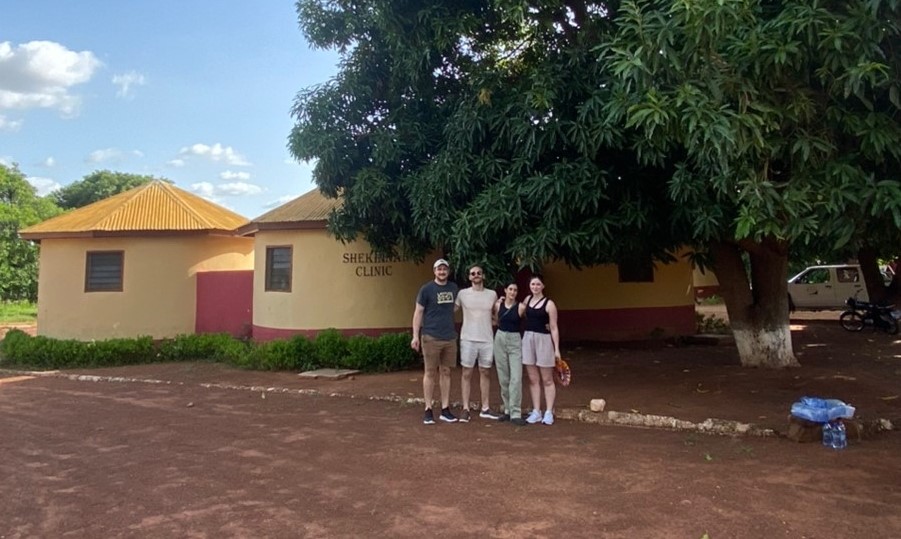
Making the Links: A Certificate in Global Health
Making the Links allowed us to expand our understanding of health through theory and practice.
-Kayla Cropper, Candelaria Aristizabal Londono, Lucas Fisher & Graham Beresh
How to Apply – Applications currently closed for 2023
Interested students are encouraged to attend an information session (typically August/September) to find out more about the program and ask questions.
Applicants should submit their statement of interest (1-2 pages max) to Carlyn Seguin, Global Health Manager, Division of Social Accountability, College of Medicine.
Please include:
- Description of your interest in Global Health and how you hope this GHC content will inform into your current studies and future practice
- Any relevant experience or contributions you can bring to the collaborative learning environment
- Commitment to registering in CHEP 402 upon acceptance in the program
Contacts
Staff:
Carlyn Séguin, Global Health Manager, Department of Community Health and Epidemiology
Office: HSC E-wing 4104
Stephanie Kehrig, Graduate Administrator, Department of Community Health and Epidemiology
Ph. 306-966-7946
Jenn Pippen, Academic Program Assistant, School of Rehabilitation Science
Office: HSC E-wing 3403
Instructors:
Dr. Sarah Oosman, Associate Professor, School of Rehabilitation Science
Office: HSC E-wing 3462
Dr. Jacob Alhassan, Assistant Professor, Department of Community Health and Epidemiology
Office: HSC E-wing 3216
Dr. Cari McIlduff, Assistant Professor, Department of Community Health and Epidemiology
CHEP 350.3 Introduction to Epidemiology - predominately taken by undergraduate students with Biomedical Sciences majors
CHEP 402.3 – Global Health and Local Communities Issues and Approaches - taken as part of the Certificate in Global Health and an elective in the Global Studies Certificate
CHEP 403.3 – Global Health II - taken as part of the Certificate in Global Health.
2023
2022
2021
2020
2019
Divisions and Affiliated Units
About Us
Division of Public Health and Preventive Medicine members are committed to the practice of public and population health, research and undergraduate and postgraduate training and education. The division has a high-quality training program, which offers trainees or elective students a breadth of exposure to public health and preventive medicine.
The division is comprised of 25+ medical faculty members with specialist training in public health and preventive medicine. Division members are contracted or employed by the SHA, Saskatchewan Ministry of Health, Public Health Agency of Canada, Health Canada’s Department of Indigenous Services Canada, or NITHA.
The division takes the lead for undergraduate and postgraduate medical education teaching, medical education administration, and research activities related to the PHPM specialty.
Residency Training Program
Public Health and Preventive Medicine (PHPM) is a 5-year post-graduate medical specialty training program.
University of Saskatchewan offers a variety of public health experiences in rural, northern and urban settings as well as the provincial level to provide a well-balanced learning environment. The small size of the program will ensure a greater ability to exercise responsibility through the program, and to adapt training to their career goals.
Looking for more details about applying for a Public Health and Preventive Medicine residency position at University of Saskatchewan? Check out the University of Saskatchewan information on the CaRMS website. And for a behind-the-scenes look at the program, watch the Residency Program Video on YouTube.
Research
Members of the Division contribute to research in the area of public and population health, with a focus on applied research and health systems and services research. Members take a range of roles from principal investigator or co-investigator roles, through to collaborators and knowledge users. The Division is also home to the Urban Public Health Network, a network of Lead Medical Health Officers from 23 of Canada’s largest cities and most of UPHN’s research projects.
Contacts
Division Head
Dr. Cory Neudorf
Phone: 306-966-2276
Administrative Coordinator
Lana McDonald
306-966-6571
PHPM Residency Program Administrative Assistant
Amanda Willms
Phone: 306-966-8752
The CRSU provides multi-faceted research assistance to all faculty members, residents, students, and researchers within the College of Medicine. Investigators across the basic medical, clinical, and population health sciences can access support for study design, sample size/power calculation, data management, analysis, and manuscript revision. Requests to review funding applications are also welcome. Support is provided by doctoral-level biostatisticians and biostatistical graduate students—all at zero cost.
The CRSU assists with 80 to 100 research projects annually at varying stages of development, although engagement early in the research process is encouraged. Support requests can be initiated by completing the CRSU Intake Form.
Please note: given the frequent overlap of multiple requests during peak periods, 2-3 weeks may be required before an initial appointment can be made.
The CRSU aims to contribute towards maximizing the research productivity of the College of Medicine research community. To that end, support is often ongoing in nature, frequently culminating in conference presentation and publication of project findings. CRSU acknowledgment and possibly shared authorship, at the dissemination of results is requested if a significant contribution has been made by CRSU staff.
Departments within the College of Medicine aiming to encourage the development of quantitative research knowledge/skills among their faculty and residents can request academic presentations on related topics of interest by CRSU staff. Basic instruction in the use of SAS (a statistical program frequently used in statistical analysis) is also offered to individuals within the College of Medicine on an annual basis, usually in September/October, for a minimal cost.
Please Contact the CRSU office with inquiries.
HRQI recognizes the importance of research into the science of primary care and patient-centred outcomes. We enthusiastically support these efforts believe that it must continue to have adequate resources to pursue its goals.
The HRQI key areas of focus include:
Safety and Quality: Reduce the risk of harm by promoting the delivery of the best possible care.
Effectiveness: Improve health care outcomes by encouraging the use of evidence to make informed health care decisions.
Efficiency: Transform research into practice to facilitate more extensive access to effective health care service and reduce unnecessary costs.
Evidence-based clinical practice requires HRQI-supported healthcare research in areas such as Practice-Based Research, practice transformation, patient quality and safety in hospital and non-hospital settings. Saskatchewan healthcare system relies on research developed to answer key clinical questions based on the Saskatchewan’s effective health care program to help clinicians make better treatment choices. HRQI provides the critical evidence reviews needed to answer questions on the common acute, chronic, and comorbid conditions that family physicians see daily. HRQI research also examines health information technology to provide the evidence to inform meaningful use policy and practice so that health IT can be used more effectively to improve the quality of Saskatchewan health care.
Please Contact the HRQI office with inquiries.
The mission of the Saskatchewan Population Health and Evaluation Research Unit (SPHERU) is to be a centre of excellence in research that will create new knowledge and understandings of population health, contribute to health policy and planning, inform public policy at all levels of governance, incorporate a population health perspective into the education of health professionals, and be a resource for public debate on population health.
The Saskatchewan Population Health and Evaluation Research Unit is a bi-university health research unit based at the Universities of Regina and Saskatchewan. At the University of Saskatchewan, SPHERU offices are located within the Department of Community Health & Epidemiology.
Events
Loading...
Contact
General Email
Postal Address:
Department of Community Health & Epidemiology
Box 7, Health Science Building, 107 Wiggins Road
University of Saskatchewan
Saskatoon, Saskatchewan
S7N 5E5
Courier Address:
Department of Community Health & Epidemiology
Rm 3247 - E wing - Health Sciences
104 Clinic Place
Saskatoon, Saskatchewan, Canada S7N-2Z4
Email Prefered method of contact
Phone: 306-966-7946 long distance calls cannot be returned
Fax: 306-966-7920
Department Head:
Dr. Sylvia Abonyi
Department Head's Secretary:
Deana Thunderchild
(306) 966-7945
Graduate and Post-Doctoral Programs Assistant:
Stephanie Kehrig
(306) 966-7946
Debra Haubrich
(306) 966-7944